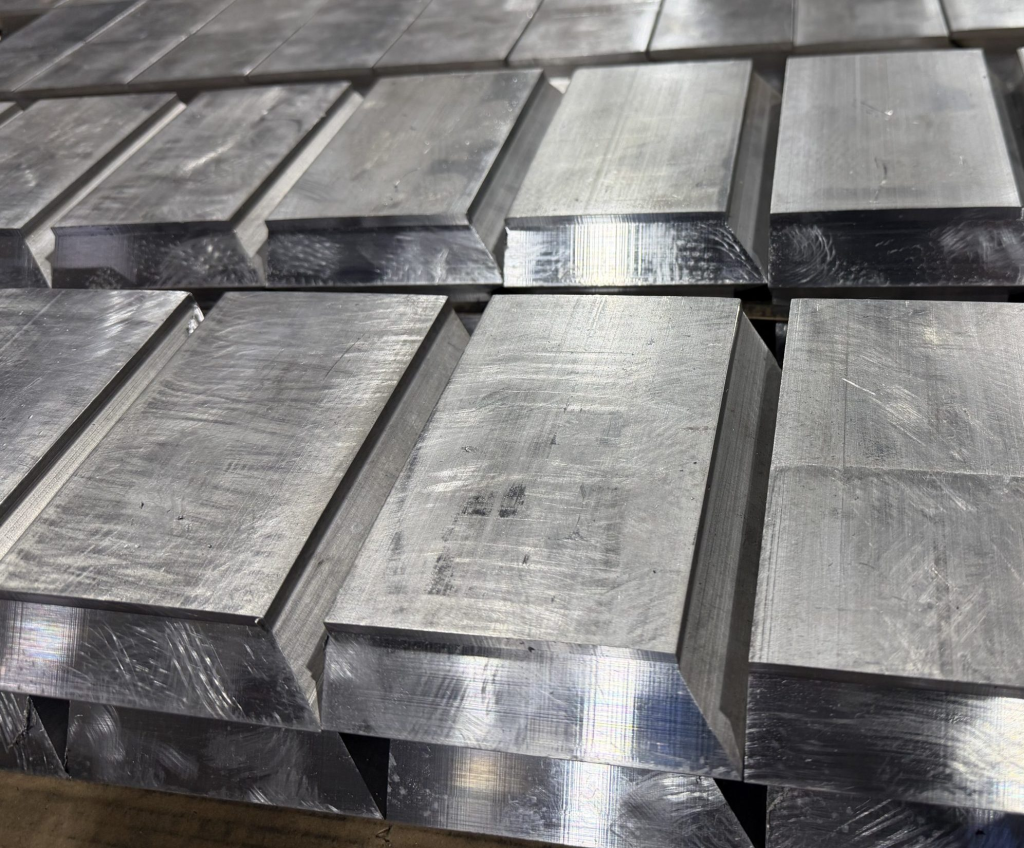
Importance of Lead Metal
As industrial projects become increasingly focused on compliance, performance, and long-term supply reliability, selecting the right lead metal products requires more than comparing material specifications. Procurement teams, engineers, and manufacturers must also evaluate fabrication capabilities, traceability, application requirements, and sourcing considerations.
This guide explains how lead metal is used across radiation shielding, construction, manufacturing, marine, healthcare, and other industrial sectors. It also covers the different forms of lead products, key material properties, selection criteria, safe handling practices, and the factors that support consistent procurement decisions.
The key takeaway: Lead remains an important engineering material because of its density, workability, corrosion resistance, and versatility. Organizations that understand how to evaluate lead products alongside supplier capabilities and application requirements are better positioned to reduce procurement risks and support long-term operational performance.
Many industrial applications depend on materials that can withstand demanding operating conditions while meeting strict performance and regulatory requirements. From healthcare construction projects to manufacturing facilities and marine infrastructure, selecting the appropriate material directly influences operational efficiency, product longevity, and compliance with project specifications. Lead metal continues to play an important role in these applications because of its unique physical characteristics and versatility.
Its high density, excellent radiation attenuation properties, corrosion resistance, and ease of fabrication allow it to support applications that many alternative materials cannot address as effectively. Whether incorporated into radiation shielding systems, custom counterweights, ballast components, or industrial assemblies, lead remains an important engineering material across multiple sectors.
At the same time, procurement teams face increasing pressure to source materials that provide consistent quality, documented traceability, and dependable availability. Variations in alloy composition, fabrication quality, or supply continuity can introduce unnecessary project risks, delays, and additional costs. Understanding how lead products are manufactured, specified, and selected helps organizations make informed purchasing decisions while reducing these risks.
This guide explains the properties of lead metal, its industrial applications, available product forms, material selection considerations, handling practices, and procurement factors that influence long-term sourcing decisions. It also connects to additional technical resources covering radiation shielding, safe handling, material comparisons, and the ongoing role of lead across modern industries.
What Is Lead Metal?
Lead is a naturally occurring non-ferrous metal that has been used across industrial applications for centuries. Although manufacturing technologies have evolved considerably, the material continues to serve important functions because few alternatives offer the same balance of density, workability, and shielding performance.
One of lead’s defining characteristics is its exceptionally high density. This property allows relatively thin sections of lead to absorb and reduce the transmission of X-rays, gamma rays, and other forms of ionizing radiation. As a result, lead remains a widely specified material for radiation shielding systems in healthcare facilities, industrial inspection environments, and research laboratories.
Beyond radiation protection, lead also offers several mechanical and environmental advantages. The material is highly malleable, allowing it to be rolled, formed, cast, or machined into a wide range of shapes and dimensions. This flexibility supports custom manufacturing for projects with unique engineering or installation requirements.
Lead also exhibits good corrosion resistance in many operating environments. This characteristic contributes to its continued use in construction assemblies, marine applications, and industrial equipment where long service life is an important consideration.
Another important advantage is recyclability, playing a role in the history and future of lead. The material can often be recovered and reprocessed into new industrial products, helping support material efficiency across manufacturing and construction sectors.
These combined characteristics enable lead products to support applications where performance, reliability, and durability remain critical design priorities.
Key Physical Properties of Lead
Several material characteristics distinguish lead from many other industrial metals.
| Property | Industrial Value |
| High density | Supports effective radiation attenuation and ballast applications |
| Malleability | Allows custom fabrication into complex shapes and dimensions |
| Corrosion resistance | Contributes to long-term durability in many industrial environments |
| Vibration damping | Helps reduce vibration in specialized equipment and assemblies |
| Recyclability | Supports sustainable material recovery and reuse |
| Dimensional versatility | Available in sheets, ingots, fabricated products, and custom components |
These properties often work together within a single application. For example, a healthcare construction project may require sheet lead that provides radiation shielding while also accommodating custom wall configurations and installation requirements.
Why Lead Metal Continues to Support Modern Industry
Although many engineered materials are available today, lead continues to serve important functions. This is mainly because of its physical properties, which address specific operational requirements that alternative materials fall short of.
Industries frequently select lead when applications require one or more of the following:
- Radiation shielding
- High-density counterweights
- Ballast systems
- Corrosion-resistant components
- Custom-fabricated assemblies
- Vibration reduction
- Long-term dimensional stability
These capabilities make lead suitable for both new construction projects and ongoing maintenance or equipment upgrades.
Supporting Critical Infrastructure
Lead products contribute to infrastructure that supports healthcare services, industrial production, transportation, marine operations, energy facilities, and scientific research. In many of these environments, material performance directly influences operational continuity and regulatory compliance.
For example, medical imaging rooms require shielding systems designed to reduce radiation transmission. Industrial radiography facilities depend on shielding materials to support inspection processes. Marine environments often utilize lead components where density and corrosion resistance provide practical advantages.
Supporting Custom Manufacturing Requirements
Standard materials do not always meet every engineering specification. Many projects require fabricated components with precise dimensions, unique geometries, or application-specific performance characteristics.
Lead’s workability enables manufacturers to produce custom components that meet project requirements while preserving the material characteristics required for the intended application.
Supporting Long-Term Material Performance
Procurement decisions often consider more than initial material selection. Long-term performance, maintenance requirements, replacement frequency, and supply continuity all influence the overall value of an industrial material.
When properly specified for the intended application, lead products can provide consistent performance throughout extended service periods. This reliability contributes to predictable maintenance planning and supports long-term operational objectives across many industrial sectors.
Why Lead Metal Remains an Important Industrial Material
Material selection influences more than the immediate success of a project. It affects operational reliability, regulatory compliance, maintenance planning, and long-term performance. For industries working in demanding environments, choosing a material that meets both technical and practical requirements is essential.
Lead metal continues to support a wide range of industrial applications because it offers a combination of physical characteristics that few other materials provide simultaneously. Its density, malleability, corrosion resistance, and fabrication flexibility make it suitable for applications where performance and consistency are critical.
Unlike many engineered materials designed for a single purpose, lead serves multiple functions across different industries. The same material may be fabricated into radiation shielding for healthcare facilities, ballast for marine vessels, counterweights for industrial equipment, or custom components for manufacturing processes. This versatility allows engineers and procurement teams to specify a material with proven performance across diverse operating conditions.
Another important consideration is manufacturing flexibility. Lead can be cast, rolled, machined, extruded, or fabricated into custom shapes to meet specific engineering requirements. This adaptability supports projects that require precise dimensions or application-specific components.
As infrastructure projects become more specialized, procurement decisions increasingly focus on factors such as material consistency, traceability, documentation, and long-term availability. Understanding how these considerations relate to lead products helps organizations make informed sourcing decisions while reducing project risks.
Key Properties That Make Lead Metal Suitable for Industrial Applications
The continued use of lead across healthcare, manufacturing, marine, construction, and energy sectors is largely driven by its unique combination of physical and mechanical properties. Rather than relying on a single characteristic, many applications benefit from several of these properties working together.
High Density
Lead is one of the densest commercially available non-ferrous metals. This characteristic makes it particularly effective where weight or shielding performance is required.
High density contributes to applications such as:
- Radiation shielding systems
- Industrial counterweights
- Ballast components
- Vibration control
- Equipment balancing
Because lead offers significant mass within relatively compact dimensions, it is often chosen when installation space is limited.
Radiation Attenuation
One of the most recognized characteristics of lead is its ability to absorb and reduce ionizing radiation.
Its atomic structure allows lead to attenuate X-rays and gamma rays efficiently, making it a widely specified material for shielding applications in:
- Medical imaging facilities
- Radiation therapy rooms
- Nuclear medicine departments
- Industrial radiography
- Research laboratories
- Nuclear facilities
The required shielding thickness varies depending on radiation type, energy levels, facility design, and regulatory requirements. Understanding these variables is essential when selecting shielding materials.
Excellent Malleability
Lead is highly malleable, allowing it to be shaped without compromising its structural integrity.
Manufacturers can produce lead in numerous forms, including:
- Sheets
- Ingots
- Bricks
- Castings
- Pipes
- Custom fabricated components
This flexibility supports projects requiring complex geometries, curved surfaces, or custom shielding assemblies that may be difficult to manufacture using less workable materials.
Corrosion Resistance
Industrial environments often expose materials to moisture, chemicals, and varying environmental conditions.
Lead demonstrates good corrosion resistance in many applications, helping maintain dimensional stability and service life where environmental exposure is a consideration.
This property contributes to its continued use in:
- Roofing systems
- Flashing
- Marine ballast
- Chemical processing equipment
- Industrial construction
Material selection should always consider the specific operating environment and compatibility with surrounding materials.
Vibration and Noise Dampening
Lead’s density also provides effective vibration absorption.
Certain industrial equipment incorporates lead components to reduce vibration transmission, improve stability, or support balanced operation.
Although this application receives less attention than radiation shielding, vibration damping remains an important benefit in specialized engineering projects.
Recyclability
Lead is one of the most recycled industrial metals.
Recovered lead can often be refined and reintroduced into manufacturing processes while maintaining the material characteristics required for industrial applications.
Recycling supports efficient material utilization and contributes to the ongoing availability of lead products across multiple industries.
Key Material Characteristics
| Property | Why It Matters |
| High density | Supports radiation shielding, ballast, and counterweight applications |
| Radiation attenuation | Reduces the transmission of X-rays and gamma rays in shielding systems |
| Malleability | Enables custom fabrication into a wide range of product forms |
| Corrosion resistance | Supports durability in many industrial and marine environments |
| Vibration damping | Helps reduce vibration in specialized equipment and assemblies |
| Recyclability | Supports efficient material recovery and reuse |
These characteristics explain why lead continues to be specified across industries with demanding technical and operational requirements.
Common Forms of Lead Products
Lead is manufactured in several forms to meet the needs of different industries and applications. Product selection depends on performance requirements, installation methods, fabrication needs, and project specifications.
Lead Ingots
Lead ingots serve as the primary raw material for many manufacturing and fabrication processes. They are commonly melted and cast into finished products or used in alloy production.
Typical applications include:
- Metal casting
- Alloy manufacturing
- Industrial fabrication
- Counterweight production
- Custom component manufacturing
Their standardized form also simplifies storage, transportation, and inventory management.

Sheet Lead
Sheet lead is one of the most widely specified lead products because it combines flexibility with effective shielding performance.
Available in various thicknesses and dimensions, sheet lead is commonly incorporated into:
- Radiation shielding systems
- Lead-lined walls
- Doors
- Ceilings
- Floors
- Protective barriers
- Industrial shielding assemblies
Its ability to conform to various surfaces also makes it suitable for projects that require custom installation.

Custom Fabricated Lead Products
Not every project can utilize standard material dimensions.
Custom fabrication allows lead products to be manufactured according to application-specific requirements, including:
- Complex geometries
- Precision dimensions
- Shielding assemblies
- Counterweights
- Ballast components
- Machine parts
- Architectural components
Custom fabrication helps organizations integrate lead into specialized equipment and infrastructure while meeting detailed engineering specifications.
Lead Bricks and Shielding Components
Lead bricks and modular shielding components provide flexibility for facilities where shielding requirements may change over time.
These products are commonly used in:
- Research laboratories
- Industrial inspection areas
- Temporary shielding systems
- Nuclear facilities
- Medical environments
Their modular design supports installation, reconfiguration, and maintenance as operational needs evolve.

Product Comparison
| Product Form | Primary Purpose | Common Industries |
| Lead Ingots | Raw material for manufacturing and casting | Manufacturing, foundries, industrial fabrication |
| Sheet Lead | Radiation shielding and construction | Healthcare, construction, nuclear, industrial facilities |
| Custom Fabricated Lead | Application-specific engineered components | Manufacturing, OEMs, healthcare, infrastructure |
| Lead Bricks | Modular radiation shielding | Research, healthcare, nuclear, industrial inspection |
How Lead Metal Supports Radiation Shielding
Radiation shielding remains one of the most recognized industrial applications of lead metal. Its high density and atomic structure are why lead is good for radiation shielding. It reduces the transmission of ionizing radiation, making it an important material for facilities that require controlled exposure environments.
Healthcare, nuclear, industrial inspection, and scientific research facilities all depend on properly designed shielding systems to support personnel safety, equipment protection, and regulatory compliance. Selecting the appropriate shielding material is only one part of the process. Material thickness, installation quality, facility layout, and applicable building standards also influence overall shielding performance.
Unlike structural materials that primarily provide strength, lead is selected because it helps absorb radiation energy before it reaches occupied spaces or sensitive equipment. This makes it suitable for permanent installations as well as custom-fabricated shielding components.
While several materials can provide radiation protection, lead remains specified because it offers effective attenuation and fabrication flexibility. Sheet lead, lead-lined assemblies, and custom shielding components can be manufactured to accommodate different room layouts and equipment configurations.
Organizations planning radiation shielding projects should evaluate shielding requirements early in the design process to ensure the selected materials align with operational objectives and applicable regulations.
Why Lead Is Effective for Radiation Protection
Several physical characteristics contribute to lead’s performance as a shielding material.
High Atomic Number
Lead has a high atomic number, allowing it to absorb a significant amount of radiation energy before it passes through the material.
This property makes lead particularly effective against:
- X-rays
- Gamma rays
- Certain forms of industrial radiation
The level of protection depends on factors such as radiation energy, exposure duration, shielding thickness, and facility design.
High Density
Density directly affects the amount of radiation that can be attenuated within a given thickness of material.
Because lead is extremely dense, thinner sections often provide effective shielding where installation space is limited. This characteristic helps lead protect against dangerous radiation, enabling architects and engineers to integrate shielding into walls, doors, ceilings, and equipment without requiring excessive structural modifications.
Fabrication Flexibility
Radiation shielding systems rarely consist solely of flat panels.
Projects often require shielding around:
- Medical imaging equipment
- Windows
- Doors
- Utility penetrations
- Pipe openings
- Electrical services
- Mechanical systems
Lead’s malleability allows manufacturers to fabricate products that accommodate these unique installation requirements while maintaining shielding continuity.
Long Service Life
Properly installed lead shielding systems require relatively little maintenance throughout their operational lifespan.
This contributes to predictable facility planning and supports long-term infrastructure investments in healthcare, research, and industrial environments.
Common Radiation Shielding Applications
Radiation shielding requirements vary across industries, but lead products commonly support applications such as:
| Industry | Typical Application |
| Healthcare | X-ray rooms, CT suites, nuclear medicine facilities, radiation therapy areas |
| Industrial Manufacturing | Non-destructive testing and industrial radiography |
| Research Laboratories | Controlled radiation environments and laboratory shielding |
| Nuclear Facilities | Equipment shielding and controlled workspaces |
| Veterinary Facilities | Diagnostic imaging rooms and protective barriers |
Each application requires shielding systems designed according to project-specific operational and regulatory requirements.
Lead Metal Compared with Other Radiation Shielding Materials
Several materials are used to reduce radiation exposure in industrial and healthcare environments. Material selection depends on shielding performance, structural considerations, installation requirements, available space, and project budgets.
Although lead is widely specified, engineers may also evaluate concrete, steel, or tungsten depending on the application.
Lead
Lead provides a combination of high density, fabrication flexibility, and effective radiation attenuation.
Common advantages include:
- Excellent shielding efficiency
- Wide range of fabricated product forms
- Relatively compact shielding thickness
- Custom manufacturing capabilities
- Suitable for permanent and modular installations
These characteristics have supported its continued use across healthcare and industrial facilities for decades.
Concrete
Concrete is frequently incorporated into large-scale construction projects where structural support and radiation shielding can be combined.
It is commonly used in:
- Nuclear facilities
- Accelerator buildings
- Large industrial installations
However, achieving comparable shielding often requires considerably greater thickness than lead.
Steel
Steel provides structural strength and limited shielding capability.
While appropriate for certain industrial environments, steel generally serves as a supplementary material rather than a direct replacement for lead in applications requiring high levels of radiation attenuation.
Tungsten
Tungsten offers exceptional density and shielding performance.
It is often selected where compact shielding dimensions are critical, including specialized medical or aerospace applications.
Its higher material and manufacturing costs, however, may influence project selection depending on application requirements.
Material Comparison
| Material | Relative Density | Fabrication Flexibility | Typical Radiation Shielding Applications |
| Lead | High | Excellent | Healthcare, research, industrial inspection, nuclear facilities |
| Concrete | Moderate | Limited after installation | Large buildings and structural shielding |
| Steel | Moderate | Good | Structural applications with supplemental shielding |
| Tungsten | Very High | Moderate | Compact shielding for specialized equipment |
The question is less about how lead compares with other radiation-shielding materials and more about understanding that no single material is suitable for every application. Project requirements, facility design, available installation space, and engineering objectives all influence material selection.
Industries That Depend on Lead Metal
Lead products support a broad range of industrial sectors by addressing several engineering challenges, including radiation attenuation, weight distribution, corrosion resistance, and custom fabrication. Although each industry applies the material differently, procurement decisions are typically based on performance requirements, regulatory considerations, and long-term operational needs.
Healthcare
Healthcare remains one of the largest users of lead products for radiation shielding.
Lead is commonly incorporated into:
- Diagnostic imaging rooms
- Radiation therapy facilities
- Nuclear medicine departments
- Protective barriers
- Shielded doors and windows
- Lead-lined construction assemblies
These applications help support facility designs intended to manage radiation exposure while meeting project-specific shielding requirements.
Construction
Construction projects often integrate lead products where shielding or high-density materials are required.
Examples include:
- Lead-lined drywall systems
- Sheet lead barriers
- Roofing applications
- Flashing
- Custom architectural components
Proper material selection depends on building design, installation methods, and applicable construction specifications.
Marine
Marine environments present unique challenges related to durability, weight distribution, and corrosion resistance.
Lead products may be specified for:
- Ballast systems
- Counterweights
- Specialized marine equipment
- Offshore infrastructure
Material requirements vary depending on vessel design and operational conditions.
Manufacturing
Manufacturing facilities utilize lead products for numerous industrial processes.
Applications include:
- Counterweights
- Machine balancing
- Custom fabricated components
- Casting operations
- Production tooling
- Industrial equipment
Lead’s workability enables manufacturers to produce components that meet detailed engineering specifications while supporting consistent production requirements.
Energy and Research
Energy facilities and research institutions frequently require materials that can withstand specialized operational environments.
Lead products may be incorporated into:
- Laboratory shielding
- Research equipment
- Industrial testing facilities
- Energy infrastructure
- Controlled radiation workspaces
Material specifications are typically determined according to the operational requirements of each facility.
Factors to Consider When Selecting Lead Products
Choosing the appropriate lead product involves more than matching dimensions or material weight. Procurement teams and engineers must evaluate technical specifications, application requirements, fabrication capabilities, and supply continuity to ensure the selected material supports both immediate project objectives and long-term operational performance.
Each project presents unique requirements. A healthcare facility installing radiation shielding has different material considerations than a manufacturer sourcing lead counterweights or a marine operator requiring ballast components. Understanding these differences helps reduce procurement risks while supporting efficient project execution.
Material Form
Lead is available in multiple forms, each suited to different applications.
Common product forms include:
- Lead ingots
- Sheet lead
- Lead bricks
- Custom fabricated lead products
- Cast lead components
Selecting the appropriate form depends on installation requirements, fabrication methods, and the intended application.
Dimensions and Thickness
Material dimensions directly influence product performance.
For example, radiation shielding applications require shielding thicknesses determined by facility design, equipment specifications, and applicable regulations. Counterweights and ballast products may instead prioritize weight, geometry, and available installation space.
Reviewing dimensional requirements early in the procurement process helps reduce fabrication revisions and installation delays.
Fabrication Requirements
Many industrial projects require products manufactured beyond standard sizes.
Custom fabrication may include:
- Precision cutting
- Rolling
- Forming
- Casting
- Machining
- Assembly into shielding systems
Evaluating fabrication capabilities before procurement helps ensure products align with engineering drawings and project specifications.
Material Documentation
Industrial procurement frequently requires documentation supporting product quality and traceability.
Depending on the application, buyers may request:
- Material specifications
- Alloy composition
- Manufacturing documentation
- Product traceability
- Inspection records
Reviewing documentation requirements before placing an order can help streamline procurement and project approvals.
Long-Term Supply
Many organizations purchase lead products over extended project timelines or through recurring procurement programs.
Evaluating long-term supply availability helps minimize disruptions caused by inconsistent inventory, changing specifications, or production delays.
Reliable sourcing becomes particularly important for organizations supporting regulated industries or ongoing maintenance programs.
Safe Handling, Storage, and Recycling
Lead products should always be handled in accordance with applicable workplace regulations, industry standards, and organizational safety procedures. Safe handling practices for lead products help protect personnel, maintain product quality, and support responsible material management throughout the product lifecycle.
Handling requirements may vary depending on the product form, manufacturing process, and intended application.
Safe Storage Practices
Proper storage helps preserve product condition before installation or fabrication.
Common storage considerations include:
- Store materials in clean, designated areas.
- Protect products from unnecessary physical damage.
- Separate materials according to project requirements.
- Maintain organized inventory records.
- Follow applicable workplace handling procedures.
Organizations should also establish appropriate inventory management practices to support product traceability and efficient material retrieval.
Handling During Fabrication
Facilities performing fabrication or machining operations should implement procedures appropriate for the work being performed.
These may include:
- Appropriate personal protective equipment
- Dust control measures where applicable
- Proper material handling equipment
- Employee training
- Compliance with workplace safety regulations
Handling practices should always align with applicable occupational health and environmental requirements.
Recycling and Material Recovery
Lead remains one of the most widely recycled industrial metals.
Recovering and reprocessing lead helps conserve raw materials while supporting efficient manufacturing practices. Organizations should work with qualified recycling providers and follow applicable environmental regulations when managing end-of-life lead products or manufacturing scrap.
Evaluating Lead Suppliers for Industrial Projects
Selecting the appropriate material is only one part of successful procurement. Evaluating lead suppliers is equally important, particularly for projects that require consistent quality, documentation, custom fabrication, or long-term supply agreements.
A structured supplier evaluation process can help reduce procurement risks while supporting predictable project outcomes.
Important evaluation criteria include:
- Manufacturing capabilities
- Product range
- Material consistency
- Traceability
- Documentation availability
- Custom fabrication services
- Production capacity
- Delivery reliability
- Technical support
- Long-term supply capability
Organizations should also consider how well a supplier can support future project requirements rather than focusing solely on immediate purchasing needs.
Long-term supplier relationships often contribute to greater consistency across recurring procurement programs and complex industrial projects.
Where to Buy Lead for Industrial Applications
Organizations researching where to buy lead often compare more than pricing or product availability. Industrial procurement typically involves evaluating suppliers based on technical capabilities, manufacturing processes, product documentation, and the ability to meet project-specific specifications.
Projects requiring lead for sale may involve standard stock materials, while others require custom-fabricated components designed for specialized applications. Understanding these requirements before procurement can help streamline project planning and reduce the likelihood of specification changes later in the process.
When evaluating options to buy lead, procurement teams commonly consider:
- Product availability
- Material specifications
- Fabrication capabilities
- Traceability documentation
- Consistent alloy composition
- Production capacity
- Delivery schedules
- Ongoing supply support
A structured procurement process helps organizations identify suppliers that align with both technical requirements and long-term sourcing objectives.
Final Thoughts on Lead Metal
Lead continues to support a wide range of industrial applications because of its density, fabrication flexibility, corrosion resistance, and radiation attenuation properties. From healthcare and construction to manufacturing, marine operations, and research facilities, the material remains an important solution for projects requiring dependable performance under demanding conditions.
Successful procurement extends beyond selecting the correct product form. Material specifications, fabrication capabilities, documentation, traceability, and long-term supply all contribute to informed sourcing decisions. Organizations evaluating buy lead requirements should consider these factors alongside project objectives to ensure the selected products align with both technical specifications and operational requirements.
Frequently Asked Questions
Why is lead commonly used for radiation shielding?
Lead's high density and atomic structure enable it to reduce the transmission of X-rays and gamma rays effectively. These characteristics make it suitable for shielding systems used in medical, industrial, and research environments.
What should organizations consider before purchasing lead products?
Important considerations include material specifications, dimensions, fabrication requirements, documentation, traceability, suitability for application, and long-term supply availability.