Understanding the Value of Radiation Shielding Material Selection
For regulated and industrial applications, choosing a radiation shielding material involves more than comparing density, thickness, or material price. This guide explains how to evaluate materials and suppliers based on their ability to support the complete shielding requirement.
It covers radiation type, required attenuation, space, structural weight, fabrication, material comparison, documentation, quality requirements, installation planning, and supply continuity. It also explains where lead remains practical and when neutron or mixed radiation environments require other materials or layered assemblies.
The key shift: A suitable shielding material is no longer defined only by density or thickness. The right selection connects radiation performance with geometry, structural load, fabrication, installation, inspection, traceability, and dependable supply throughout the assembly’s service life.
Radiation shielding protects people, equipment, and surrounding areas by reducing exposure to ionizing radiation. Selecting a shielding material requires more than comparing density or material price. Radiation type, energy level, geometry, available space, fabrication requirements, and regulatory obligations all influence the final specification.
These considerations are important in nuclear facilities, medical environments, research laboratories, industrial radiography, and specialized equipment. Certain aerospace and defence programs may also require shielding when equipment or personnel are exposed to defined radiation sources. In every case, the shielding design must reflect the actual exposure conditions.
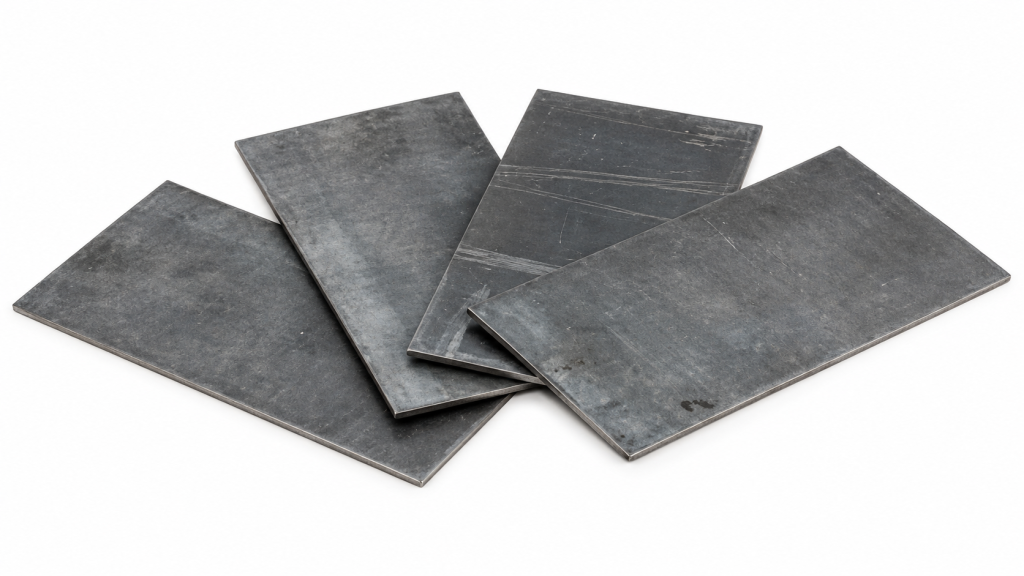
Canada Metal North America manufactures and supplies radiation shielding products for regulated and industrial applications. As a non-ferrous metal supplier, we work with lead and other non-ferrous metals across a broad industrial manufacturing base. Available shielding capabilities include sheet lead, lead bricks, custom castings, lead lining, lead welding, and lead filling.

What Determines a Radiation Shielding Specification
A shielding specification should begin with the operating environment rather than a preferred material. Several connected factors determine whether lead, concrete, steel, a tungsten composite, or a layered system is appropriate.
Radiation Type and Energy
X-rays, gamma rays, and neutrons interact with matter differently. A material that performs well against one form of radiation may provide limited protection against another.
Lead is commonly specified for X-ray and gamma attenuation. Neutron shielding often uses water, concrete, polyethylene, or other hydrogen-containing materials. Mixed radiation fields may require several materials arranged in a defined sequence.
Radiation energy also affects the required thickness. A general statement that a certain thickness will stop radiation is therefore unreliable. A qualified shielding professional must calculate the required barrier for the specific source.
Required Attenuation
The shielding design must define how much the radiation level needs to be reduced. This target may come from facility design, equipment specifications, exposure limits, or regulatory requirements.
Shielding calculations may consider source strength, distance, workload, occupancy, and the areas surrounding the source. Health Canada guidance for X-ray facilities demonstrates why these variables matter. It requires shielding calculations to account for equipment output, workload, orientation, and occupancy.
Space and Geometry
Available space can narrow the material options. Dense materials can provide attenuation within thinner profiles than many lower-density alternatives. This makes lead useful for walls, doors, cabinets, equipment enclosures, and other locations with limited room.
Geometry matters as much as thickness. Openings, joints, penetrations, corners, and service routes can create weak points. A technically suitable material will not provide the intended protection if gaps remain in the assembly.
Structural Weight
Lead provides compact shielding, but it also adds significant mass. Supporting structures must accommodate the finished assembly.
Weight can become a primary constraint in mobile systems, equipment retrofits, aerospace platforms, and installations with limited structural capacity. In these cases, engineers must evaluate the complete assembly. Replacing lead with a lower-density material does not always reduce total weight because it may require additional thickness.
Fabrication and Installation
The required form affects material selection. A shielding project may need sheet, brick, plate, casting, lining, or a filled steel assembly. Irregular cavities may require custom cast components or precision lead filling.
Installation also influences performance. Seams, fasteners, overlaps, and transitions require careful detailing. Inspect shielding after installation and whenever later work changes the protected assembly.
How Radiation Type Affects Material Selection
Material selection becomes clearer once the radiation environment is defined.
X-Ray and Gamma Radiation
Dense materials with high atomic numbers are commonly used to attenuate X-rays and gamma rays. Lead remains a practical option because it combines shielding performance with broad fabrication flexibility.
Common product forms include:
- Sheet lead for walls, ceilings, floors, tanks, and equipment
- Lead bricks and blocks for modular barriers and shielded storage
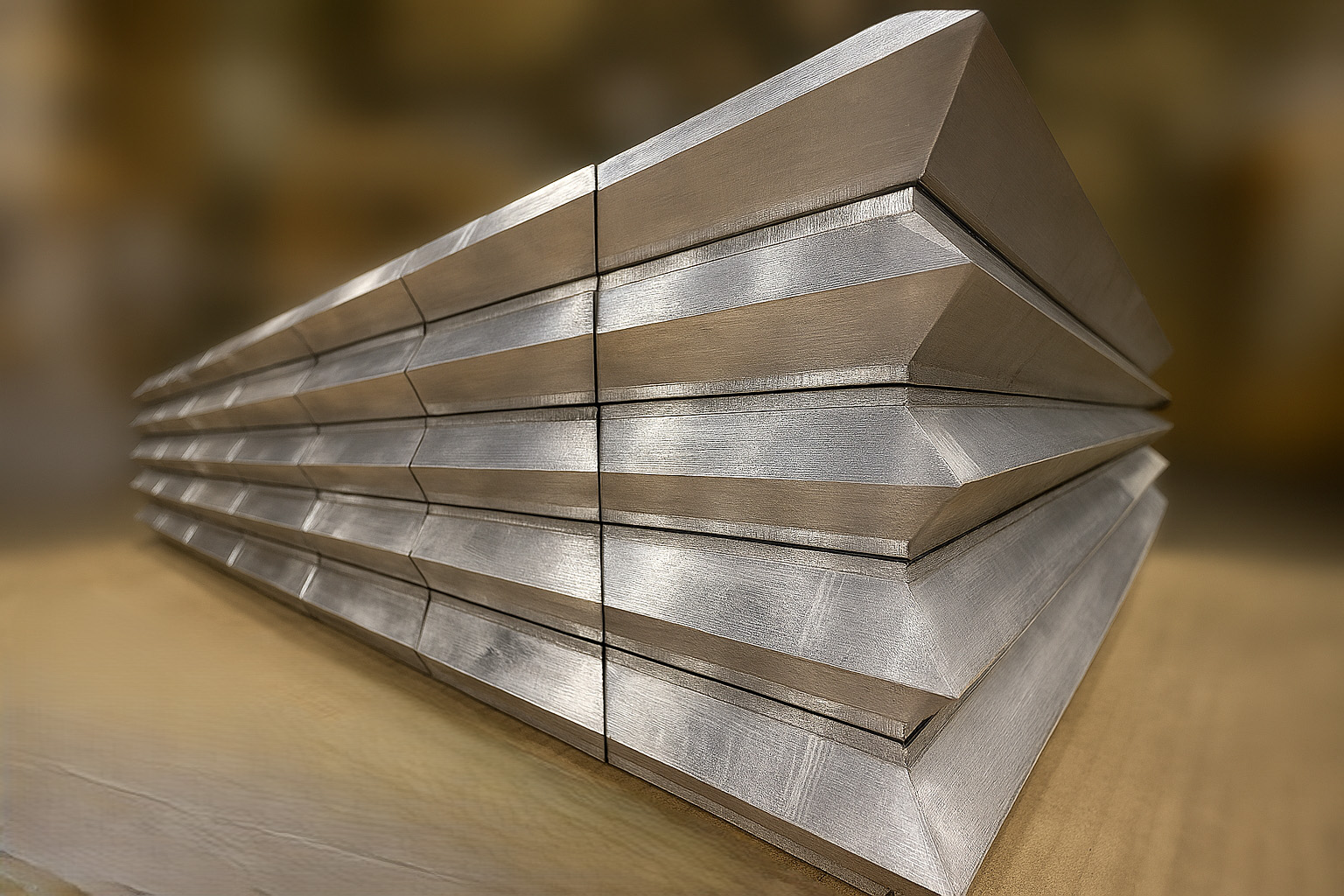
- Custom castings for equipment cavities and complex shapes
- Lead-lined panels and doors for rooms and controlled spaces
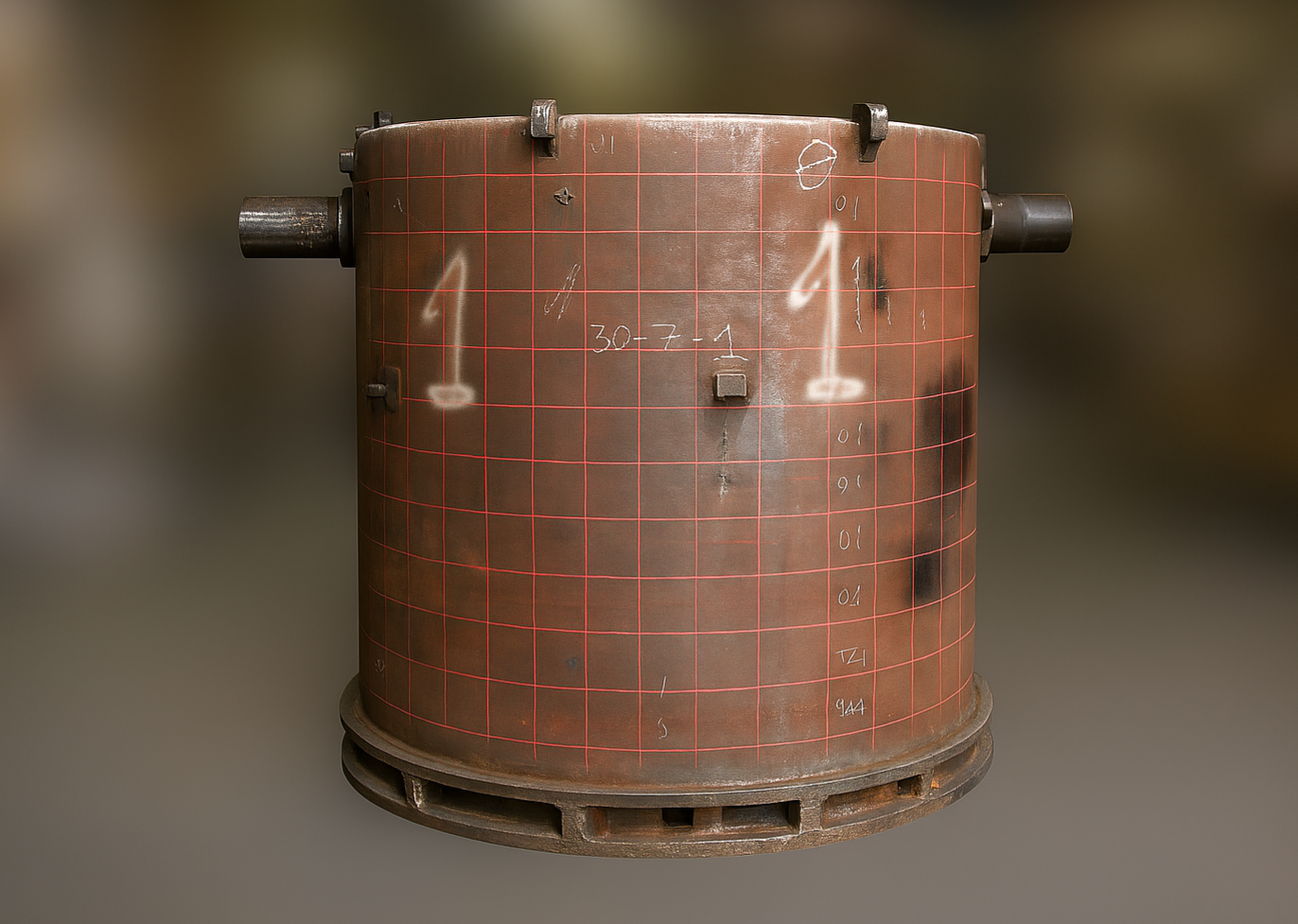
- Lead-filled steel components for nuclear and industrial equipment
The required thickness still depends on source energy, geometry, workload, and the attenuation target.
Neutron Radiation
Lead alone is generally not the primary solution for neutron attenuation. Materials containing hydrogen are commonly used to slow fast neutrons. Boron may also be incorporated to help capture thermal neutrons.
Some nuclear applications use layered systems. A hydrogen-rich material addresses neutron radiation, while lead or steel addresses accompanying gamma radiation. The sequence and thickness of each layer must follow the shielding analysis.
Mixed Radiation Fields
Nuclear facilities and specialized research environments may contain more than one radiation type. A single material comparison is not enough for these projects.
The shielding design should identify:
- Each relevant radiation source
- Energy levels and expected operating conditions
- Normal and credible abnormal conditions
- Required dose reduction
- Occupancy around the protected area
- Structural and spatial limits
- Inspection and maintenance access
These inputs help determine whether a homogeneous barrier or layered assembly is required.
Comparing Common Radiation Shielding Materials
No material provides the right balance for every application. The following comparison outlines general procurement considerations. It does not replace an application-specific shielding calculation.
| Consideration | Lead | Tungsten composite | Steel | Concrete | Hydrogen-rich material |
| Common role | X-ray and gamma attenuation | Compact X-ray and gamma components | Structural and gamma shielding | Large fixed barriers | Neutron attenuation |
| Space requirement | Often compact | Often compact | Usually thicker than lead | Requires substantial space | Depends on neutron energy and design |
| Weight | High | Very high | High | High in large volumes | Generally lower by volume |
| Fabrication | Sheet, brick, casting, extrusion, lining, and filling | Depends on binder and manufacturing method | Plate, fabrication, and structural assemblies | Poured or precast construction | Sheet, block, panel, or liquid systems |
| Relative material cost | Often economical for dense shielding | Generally higher | Application dependent | Often economical where space is available | Application dependent |
| Key procurement issue | Handling, structural load, and traceability | Cost, availability, and process qualification | Thickness and corrosion control | Space, construction, and cracking | Fire, ageing, and material compatibility |
This comparison shows why material selection should consider the full assembly. Raw material price alone does not account for fabrication, supporting structure, installation, inspection, or qualification. A closer comparison of lead and lightweight composite shielding examines thickness, assembly weight, qualification, and total program cost.
Where Lead Remains a Practical Choice
Lead continues to support radiation shielding because it provides a useful combination of compactness, formability, and established manufacturing methods.
Compact Attenuation
Lead can reduce X-ray and gamma radiation within a thinner profile than many less dense materials. This helps where wall depth, enclosure size, or equipment space is limited.
Compactness should not be confused with low weight. Lead is heavy. Its value comes from providing attenuation within limited space, not from being a lightweight material.
Flexible Product Forms
Lead can be rolled, cast, extruded, laminated, welded, or used as a fill material. This flexibility supports standard construction products and custom industrial components.
Lead lining can protect walls, doors, cabinets, tanks, and equipment. Lead filling can fill steel vessels and other enclosed assemblies where void control is critical.
Established Application History
Lead has a long history in nuclear, medical, research, construction, and industrial shielding. Established material behaviour and fabrication practices can simplify engineering review compared with less familiar systems.
This history does not remove the need for project-specific testing or approval. It gives engineering teams a mature technical basis for evaluating the material.
Repair and Modification Options
Lead assemblies can often be repaired, extended, or modified through established fabrication methods. This can matter when equipment changes or a facility is reconfigured.
Any modification must preserve shielding continuity. Inspect and survey the affected area before the system returns to service.
Where the Tradeoffs Require Closer Review
Lead is useful, but it does not remove the engineering compromises within a shielding project.
Compactness Versus Structural Load
A thinner lead barrier may solve a space problem while creating a structural load problem. Walls, doors, frames, supports, and transport fixtures must safely carry the finished weight.
Procurement teams should confirm whether a supplier is providing only the shielding material or a completed assembly. Document responsibility for structural design, installation, and final verification.
Material Price Versus Installed Cost
The lowest material price may not produce the lowest installed cost. Fabrication complexity, supporting steel, shipping, installation labour, testing, and schedule risk all affect the final amount.
A useful cost comparison should include:
- Raw shielding material
- Custom fabrication
- Supporting structure
- Freight and site handling
- Installation
- Inspection and radiation surveys
- Documentation and quality requirements
- Maintenance and future modification
This approach gives procurement teams a more accurate basis for comparing material systems.
Standard Products Versus Custom Fabrication
Standard sheet and brick products can simplify purchasing for regular geometries. Custom components may be necessary when space is irregular, or shielding must integrate with equipment.
Custom work requires complete drawings, tolerances, alloy requirements, inspection criteria, and documentation expectations. Missing information at the quotation stage can lead to revisions after manufacturing begins.
New Materials Versus Qualification History
Tungsten composites and specialized polymer systems can solve defined space, handling, or design problems. Their suitability depends on composition, binder system, radiation environment, temperature, ageing, and fabrication method.
Procurement teams should avoid treating all tungsten blends or shielding polymers as equivalent. Product data and qualification evidence must match the intended application. Before approving a substitution, procurement teams should assess five questions before switching radiation shielding materials.
Documentation, Traceability, and Quality Requirements
Radiation shielding materials often support regulated or safety-related applications. Appropriate records must therefore accompany material performance.
Material Identification
Purchase documents should identify the required material, alloy, dimensions, tolerances, and applicable standard. Custom products should also reference approved drawings and revision levels.
Clear identification reduces the risk of receiving material that appears suitable but does not match the engineering specification.
Material Traceability
Traceability connects the delivered product to its manufacturing and inspection records. The required level depends on the project and quality program.
Documentation may include:
- Material test reports
- Certificates of compliance
- Certificates of analysis
- Inspection records
- Drawing and revision references
- Heat or batch identification
- Safety data sheets
Define these records before the order is placed. Requesting them after delivery can create avoidable delays.
Quality Program Requirements
Canada Metal North America manufactures radiation shielding products under an ISO 9001:2015 certified quality management system. Products can also meet CSA N299.3 requirements when the nuclear application requires that quality framework.
The purchase order should state which quality requirements apply. A supplier’s certification does not automatically make every product suitable for every regulated application.
Inspection and Acceptance
Acceptance criteria may cover material composition, dimensions, surface condition, weld quality, fill integrity, and documentation completeness. Complex assemblies may also require staged inspection before inaccessible areas are closed.
Radiation surveys confirm the performance of the installed barrier. They do not replace incoming inspection or manufacturing quality controls.
How to Evaluate a Radiation Shielding Supplier
When comparing metal suppliers for radiation shielding work, procurement teams should look beyond product availability and quoted price. Supplier evaluation should consider technical capability, quality controls, documentation, and delivery risk together.
Confirm the Available Manufacturing Processes
The supplier should be able to produce the form shown on the approved design. Relevant capabilities may include rolling, casting, extrusion, lamination, welding, lining, or filling.
A broad product list is not enough. Procurement teams should confirm experience with the specific process, dimensions, tolerances, and inspection requirements.
Review Documentation Before Award
Sample material records can show how the supplier identifies products and maintains traceability. This review helps reveal documentation gaps before production begins.
The purchase agreement should define required records, approval points, retention periods, and delivery format.
Assess Control of Custom Work
Custom shielding requires disciplined control of drawings and changes. The supplier should have a clear process for reviewing specifications, resolving questions, and approving revisions.
This is especially important for lead-filled assemblies. Fill procedures must address access, temperature, void prevention, dimensional stability, and inspection.
Evaluate Delivery Continuity
Material availability and production capacity affect project schedules. Procurement teams should review expected lead times, inventory practices, production location, and communication procedures.
Long-term programs may also need repeat orders with consistent material and documentation. Supplier continuity can reduce variation, but every shipment must still meet the approved requirements.
This assessment is particularly important when comparing non-ferrous metal suppliers for regulated work. A broad material range can support industrial sourcing, but shielding orders still require application-specific manufacturing controls and records.
Information to Prepare Before Requesting Shielding Material
A complete request helps suppliers assess feasibility and provide an accurate quotation. Procurement teams should prepare the following information where applicable:
- Radiation type and source information
- Required attenuation or approved shielding thickness
- Material grade or composition
- Product form and finished dimensions
- Drawings with current revision numbers
- Dimensional tolerances
- Estimated weight and handling constraints
- Fabrication, welding, lining, or filling requirements
- Inspection and testing requirements
- Required quality program and documentation
- Delivery location and schedule
- Packaging, identification, and preservation requirements
The shielding thickness should come from an approved design. A material supplier can review manufacturing feasibility, but the responsible shielding professional must establish the radiation protection requirement.
Building a More Reliable Shielding Procurement Process
Radiation shielding procurement is more reliable when engineering, radiation protection, quality, and purchasing teams align before selecting a supplier.
The process should begin with the radiation source and required attenuation. Teams can then compare materials based on available space, structural load, fabrication, installation, qualification, and total cost. This sequence prevents material preference or unit price from driving the design too early.
Lead remains a practical material for many X-ray and gamma shielding applications. Its main advantages are compact attenuation, established application history, and flexible manufacturing options. Its weight and handling requirements must still be addressed within the complete assembly.
Canada Metal North America supplies standard and custom lead products for nuclear, medical, research, construction, and industrial shielding. Its capabilities include sheet lead, bricks, castings, lead lining, lead welding, and precision lead filling. This wider experience with non-ferrous metals provides useful manufacturing context, while ISO 9001:2015 certification, material traceability, and CSA N299.3 capability support projects with defined quality requirements.
The final material decision belongs within a documented shielding design. The supplier decision should then confirm that the approved material can be produced consistently, inspected properly, documented completely, and delivered on schedule.
Frequently Asked Questions
Is lead suitable for neutron shielding?
Lead is generally not the primary material for slowing neutrons. Hydrogen-rich materials are commonly used to attenuate neutrons. A layered assembly may combine neutron shielding with lead or steel for accompanying gamma radiation.
How is the required lead thickness determined?
A qualified shielding professional calculates thickness using the radiation type, energy, source strength, distance, workload, occupancy, geometry, and required attenuation. General thickness recommendations should not replace an application-specific calculation.
What documentation can accompany radiation shielding materials?
Documentation may include material test reports, certificates of compliance, certificates of analysis, inspection records, drawing references, batch identification, and safety data sheets. The purchase order should define the required records.
Can lead shielding be manufactured for irregular shapes?
Yes. Lead can be cast, rolled, extruded, laminated, welded, or used to fill a steel assembly. The appropriate process depends on geometry, tolerances, structural requirements, and inspection criteria.
What information is needed to quote a custom shielding component?
A useful request includes approved drawings, material requirements, dimensions, tolerances, estimated weight, fabrication details, inspection criteria, documentation requirements, quantity, and delivery schedule. Radiation performance requirements should come from the approved shielding design.
